The Day of ‘Arafah: Significance, Virtues, and Practices
- Hajj
- 2026 day of arafat, 2026 hajj and arafat, 2026 hajj application guidelines, 2026 hajj process, 2026 hajj through nusuk, canada agents for nusuk, Day of ‘Arafah, day of arafah 2026, day of arafat hajj 2026, Dhul Hijjah, dua on Day of Arafah, Eid al-Adha, europe agents for nusuk, forgiveness, hajj from usa through nusuk, uk agents for nusuk, usa agents for nusuk, Yawm Al-Waqf
The Day of ‘Arafah (Yawm al-‘Arafah) falls on the 9th of Dhul Hijjah and is one of the most sacred days in the Islamic calendar. It carries deep spiritual meaning for Muslims worldwide and is the central day of Hajj.
What Is the Day of ‘Arafah?
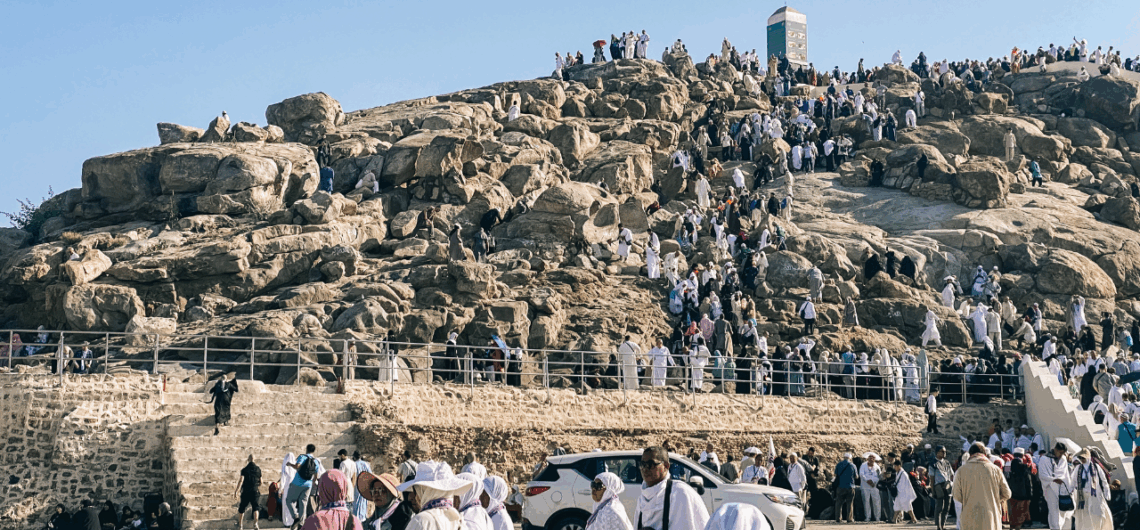
On this day, pilgrims gather at the plains of ‘Arafah, raising their hands in dua and seeking Allah’s mercy and forgiveness. It is a time when:
-
Allah (SWT) perfected the religion, completed His favor upon the Prophet Muhammad ﷺ, and declared Islam as the chosen way of life.
-
The Farewell Sermon of the Prophet ﷺ was delivered, reminding believers of unity, justice, and devotion.
Qur’anic References:
-
“This day I have perfected for you your religion and completed My favor upon you and have approved for you Islam as your religion.” (Surah Al-Ma’idah 5:3) – revealed during the Prophet’s ﷺ Farewell Pilgrimage on ‘Arafah.
-
“…when you leave ‘Arafat, remember Allah at the Sacred Place…” (Surah Al-Baqarah 2:198) – emphasizing remembrance after departing ‘Arafah.
Why Is the Day of ‘Arafah Important?
-
It is a day of forgiveness, mercy, and freedom from the Fire.
-
The Prophet ﷺ said: “There is no day on which Allah frees more people from the Fire than the Day of ‘Arafah.” (Muslim)
-
For pilgrims, standing at ‘Arafah is the very heart of Hajj: “Hajj is ‘Arafah.” (Abu Dawud)
When Is the Day of ‘Arafah in 2026?
In 2026, the Day of ‘Arafah is expected to begin at sunset on Monday, May 25, and end at sunset on Tuesday, May 26 (depending on moon sighting).
How to Observe the Day of ‘Arafah (for Non-Pilgrims)
Even if you are not performing Hajj, you can gain immense rewards by observing this day with worship and devotion. Recommended acts include:
-
Fasting – A Sunnah highly encouraged for non-pilgrims. The Prophet ﷺ said fasting on this day erases sins of the previous year and the coming year.
-
Increase worship – Recite Qur’an, perform voluntary prayers, and send abundant salawat upon the Prophet ﷺ.
-
Supplication (Dua) – Make heartfelt duas for yourself, your family, and the Ummah.
-
Dhikr – Frequently recite Tahleel (La ilaha illa Allah), Takbeer (Allahu Akbar), and Tahmeed (Alhamdulillah).
-
Charity (Sadaqah) – Give in the way of Allah. The Prophet ﷺ said: “Charity extinguishes sins as water extinguishes fire.” (Tirmidhi)
-
Reflection and Gratitude – Review your progress since Ramadan and renew your commitment to Allah’s path.
For Pilgrims Performing Hajj
-
After Fajr in Mina, pilgrims proceed to the plain of ‘Arafah.
-
Shortened Dhuhr and Asr prayers (two rak‘ahs each) are prayed in congregation.
-
A khutbah is delivered at Masjid al-Nimra before the prayers.
-
Pilgrims spend the day in earnest dua, repentance, and remembrance until sunset.
Note: Fasting is not required for pilgrims, as they need strength for the rituals.
Recommended Dua on the Day of ‘Arafah
The Prophet ﷺ said: “The best supplication is the supplication on the Day of ‘Arafah.” (Muslim)
One of the most powerful duas is:
Arabic:
لَا إِلٰهَ إِلَّا اللَّهُ وَحْدَهُ لَا شَرِيكَ لَهُ، لَهُ الْمُلْكُ وَلَهُ الْحَمْدُ وَهُوَ عَلَى كُلِّ شَيْءٍ قَدِيرٌ
Translation:
“None has the right to be worshipped except Allah, alone, without partner. His is the dominion, all praise belongs to Him, and He has power over all things.”
Connection to Eid al-Adha and Qurbani
-
The Day of ‘Arafah is on the 9th of Dhul Hijjah.
-
Eid al-Adha (and the sacrifice of Qurbani) begins the following day, on the 10th of Dhul Hijjah, and continues until the 12th/13th.
-
Believers are also encouraged to give Zakat and Sadaqah during these blessed days.
Key Hadith on the Virtues of ‘Arafah
-
“Hajj is ‘Arafah.” (Abu Dawud)
-
“There is no day on which Allah frees more servants from the Fire than the Day of ‘Arafah.” (Muslim)
✨ The Day of ‘Arafah is a reminder of submission, mercy, and renewal of faith. Whether on the plains of ‘Arafah or at home, every believer has the opportunity to seek forgiveness, draw closer to Allah, and secure blessings for this life and the Hereafter.